
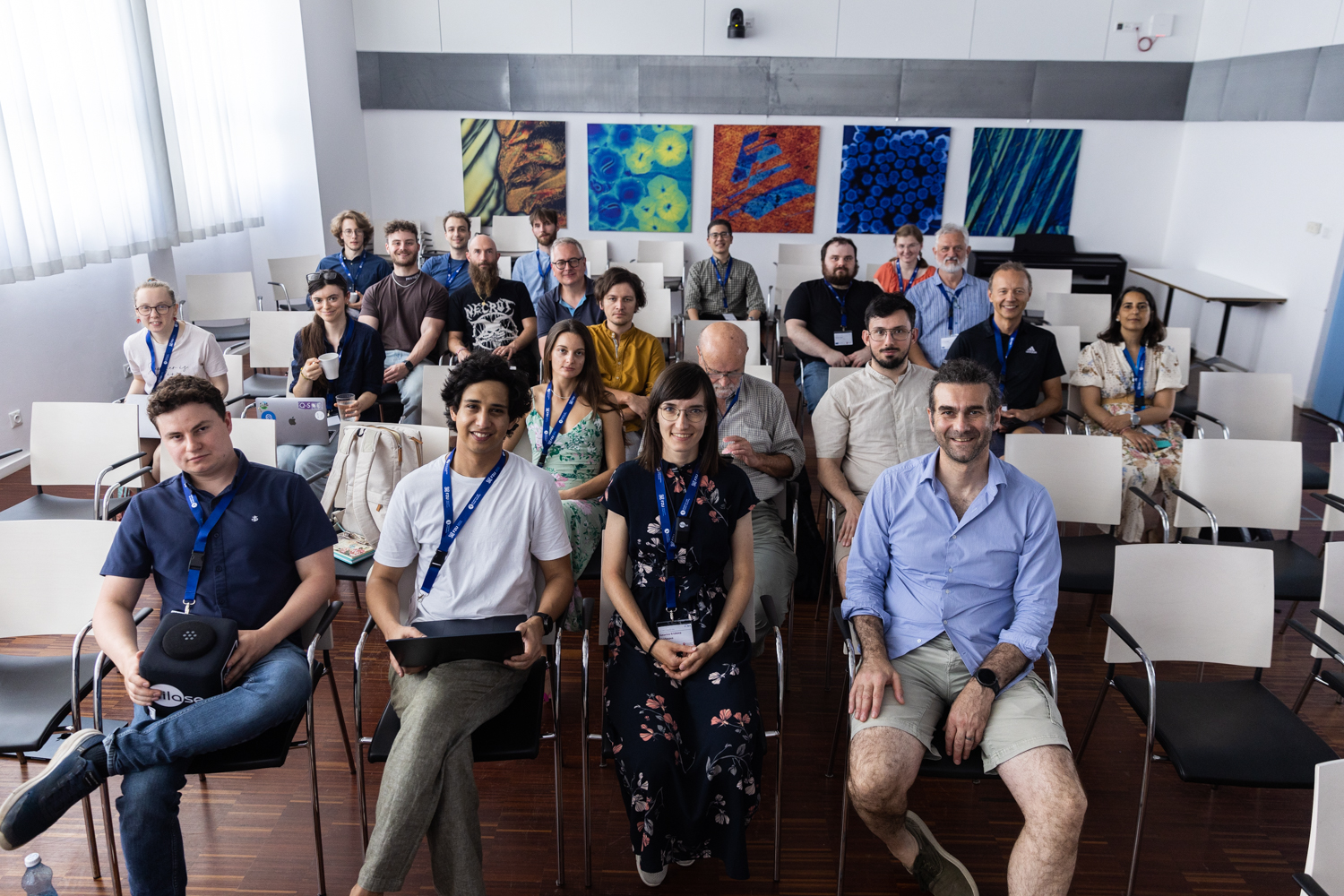
Researchers and students gathered at the Institute of Physics in Prague on 19 June for the second FORTE Science Day, a one-day meeting that showcased the breadth of research carried out within the FORTE project. The programme ranged from particle physics and cosmology to detector development and quantum theory, bringing together early-career researchers and established scientists working in major international collaborations, including experiments carried out at CERN, Belle II, JUNO, FAST.
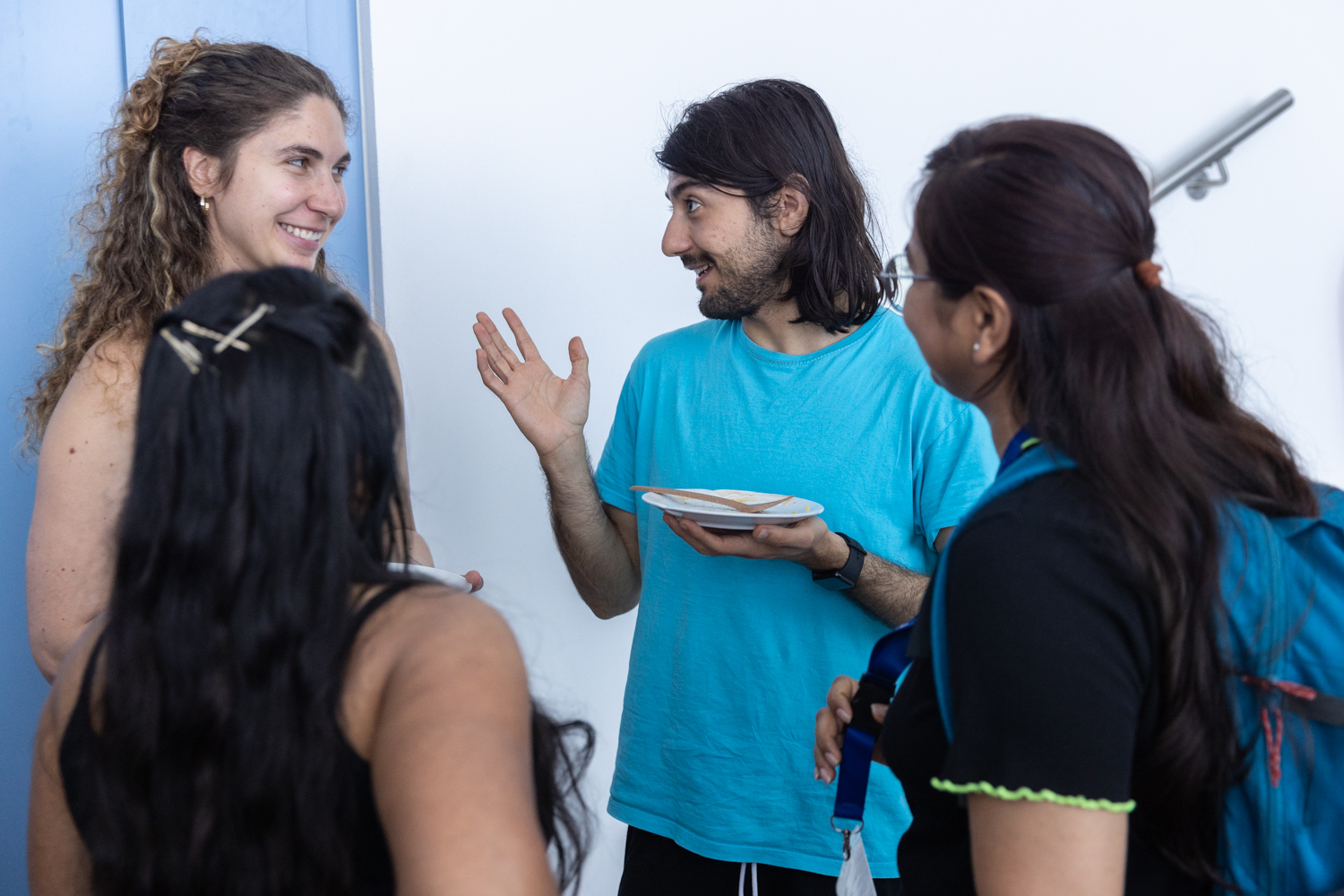
The event opened with an introduction by Constantinos Skordis, before moving through a series of presentations exploring some of the biggest questions in modern physics. Topics included CP violation, ultra-high-energy cosmic rays, neutrino physics, detector calibration, cosmological modelling, atmospheric measurements and rare particle decays, illustrating how diverse research fields contribute to a common understanding of the Universe.
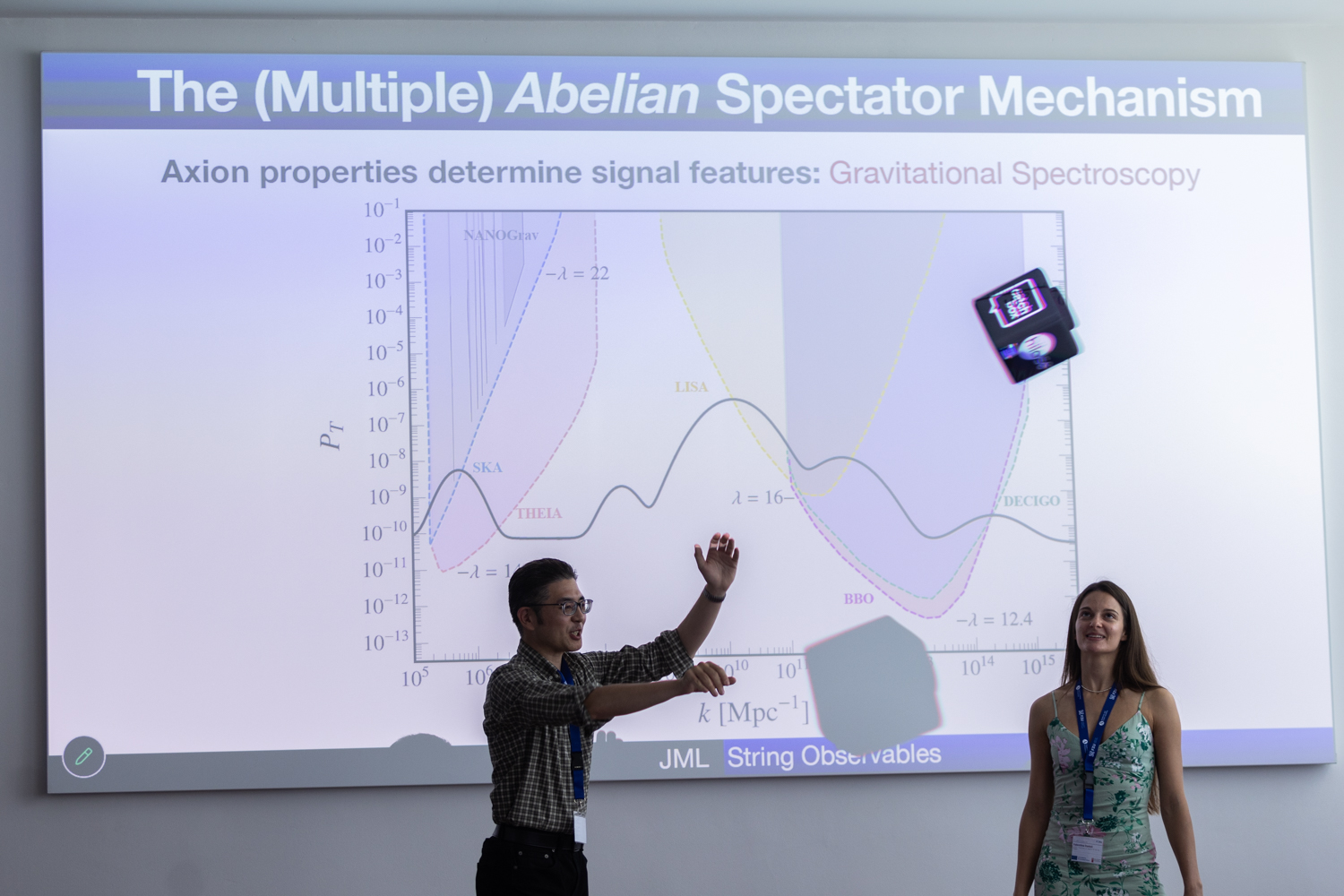
One of the keynote lectures was delivered by Martin Rybář, who introduced the ATLAS experiment at CERN’s Large Hadron Collider. He showed how a detector of size of a cathedral can be used to investigate the smallest and most fundamental questions in physics: from the behaviour of the Higgs boson and the top quark to rare particle decays and possible signs of physics beyond the Standard Model.
Drawing on the largest dataset ATLAS has ever recorded, he highlighted recent results from proton and heavy-ion collisions, including the first oxygen and neon collision studies. He also explained how machine learning is becoming increasingly important in analysing data and calibrating the detector.
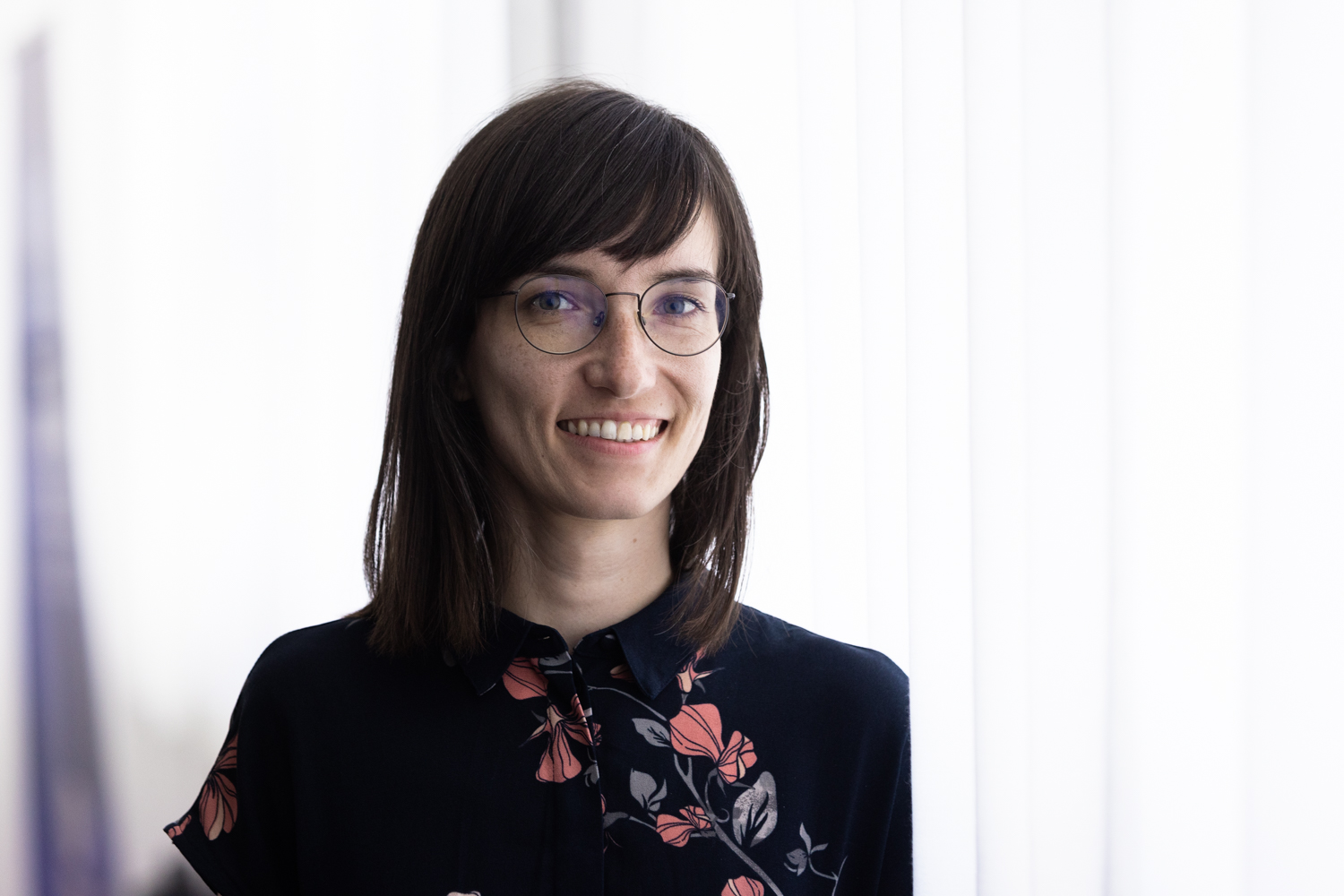
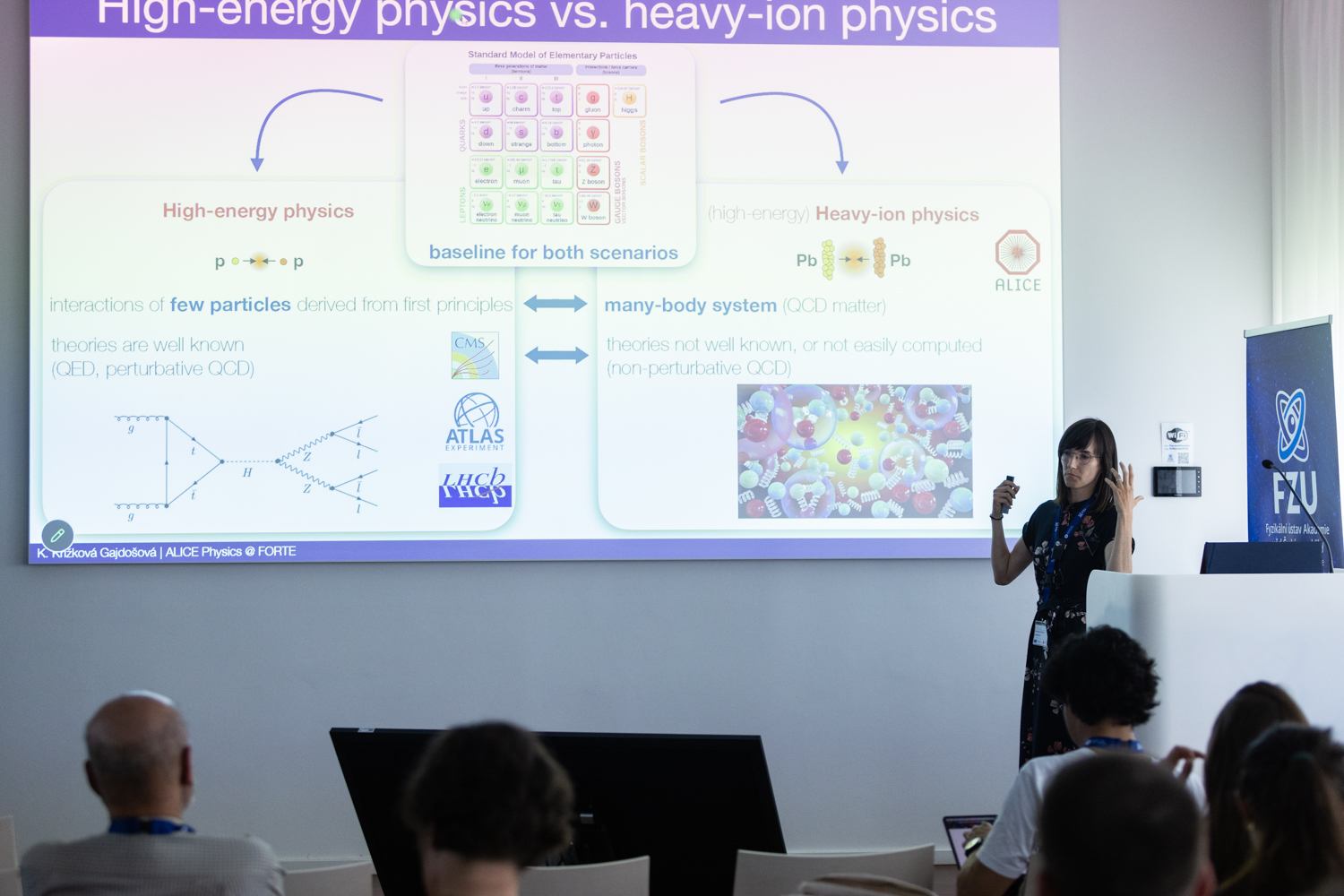
In the afternoon, Katarina Křížková Gajdošová presented the physics programme of the ALICE experiment, which investigates the properties of strongly interacting matter under the extreme temperatures and densities created in heavy-ion collisions at the Large Hadron Collider. Her lecture provided an overview of the heavy-ion physics studied by ALICE and then focused on the main topics addressed within the FORTE project, including modified particle production in jets, studies of jet quenching and anisotropic flow in small collision systems, and investigations of gluon saturation phenomena in ultraperipheral collisions.
Together, the presentations demonstrated the interdisciplinarity of the FORTE project, linking experimental and theoretical research across multiple areas of fundamental physics. The meeting also highlighted the strong involvement of Czech researchers in international scientific collaborations that are expanding our understanding of matter, forces and the Universe.

Latest Research Insights
Explore our latest articles and discoveries in physics.
.jpg)