
COSMOLOGY & GRAVITY
Theory Meets Observations. The FORTE team is dedicated to solving the fundamental riddles of the gravitational force. We are probing the nature of dark matter, modeling the influence of dark energy on the cosmos and exploring the quantum geometry of black holes. We develop sophisticated tools required to turn observational data into a deeper understanding of the universe’s origins and its ultimate fate.
.jpeg)
Cosmology & Gravity:
OUR AREAS of FOCUS
Our research in cosmology and gravity aims to unravel the fundamental nature of the universe. Our scientists focus on

Using cosmological observations to determine the fundamental nature of dark matter and dark energy

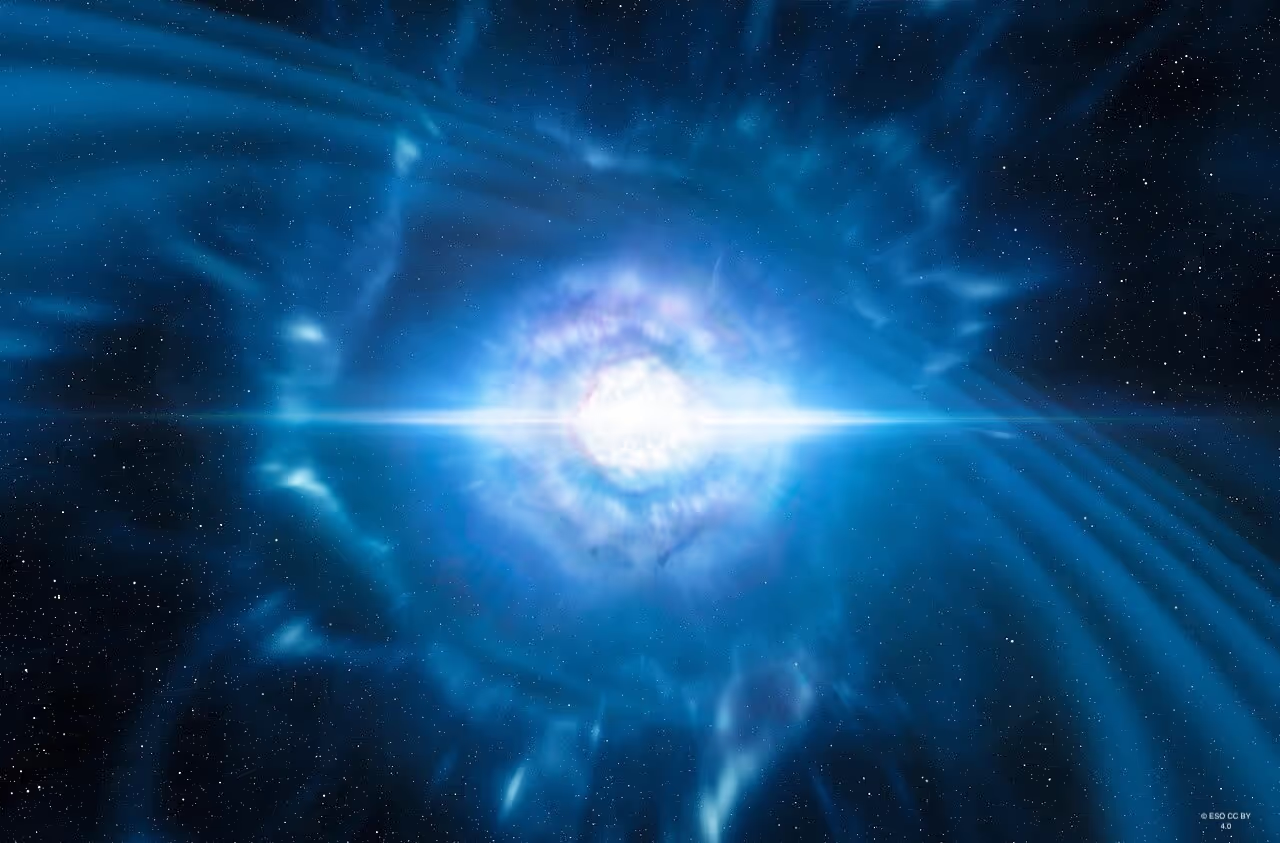
Using gravitational wave data to reveal the history of the early universe and better understand dark matter

Determining the properties of gravity as a fully quantum force including the microscopic nature of black holes
Key DATES in the HISTORY of
COSMOLOGY and GRAVITY
Explore significant events that have shaped the field of cosmology and gravity. This timeline highlights both general milestones and those specifically related to FORTE.
Theory Meets Observations
Discover the backbone of our research into the mysteries of the structure of the Universe
High-performance computing centre
Our large cosmological simulations are mainly developed and run on cutting-edge computer clusters at FZU. We operate thousands of CPU cores, aided by advanced GPU accelerators.
CEICO - Central European Institute for Cosmology
The research programme of the cosmology and gravity theme naturally follows from the expertise of FORTE researchers at CEICO. This placement harbours synergies with other research projects outside FORTE.
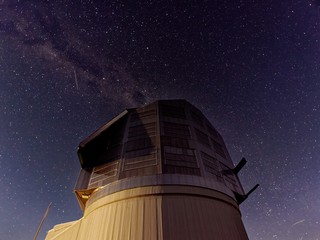
FORTE participation in surveys
.jpeg)


Exploring the Universe: Key Achievements
At FORTE, our research in cosmology and gravity has led to groundbreaking discoveries. Our collaborative efforts continue to push the boundaries of understanding the universe.
Published Research Papers
Researchers
million CPU hours of simulations
International Partnerships
The Hunt for Ultra-Light Dark Matter: Listening to the Invisible
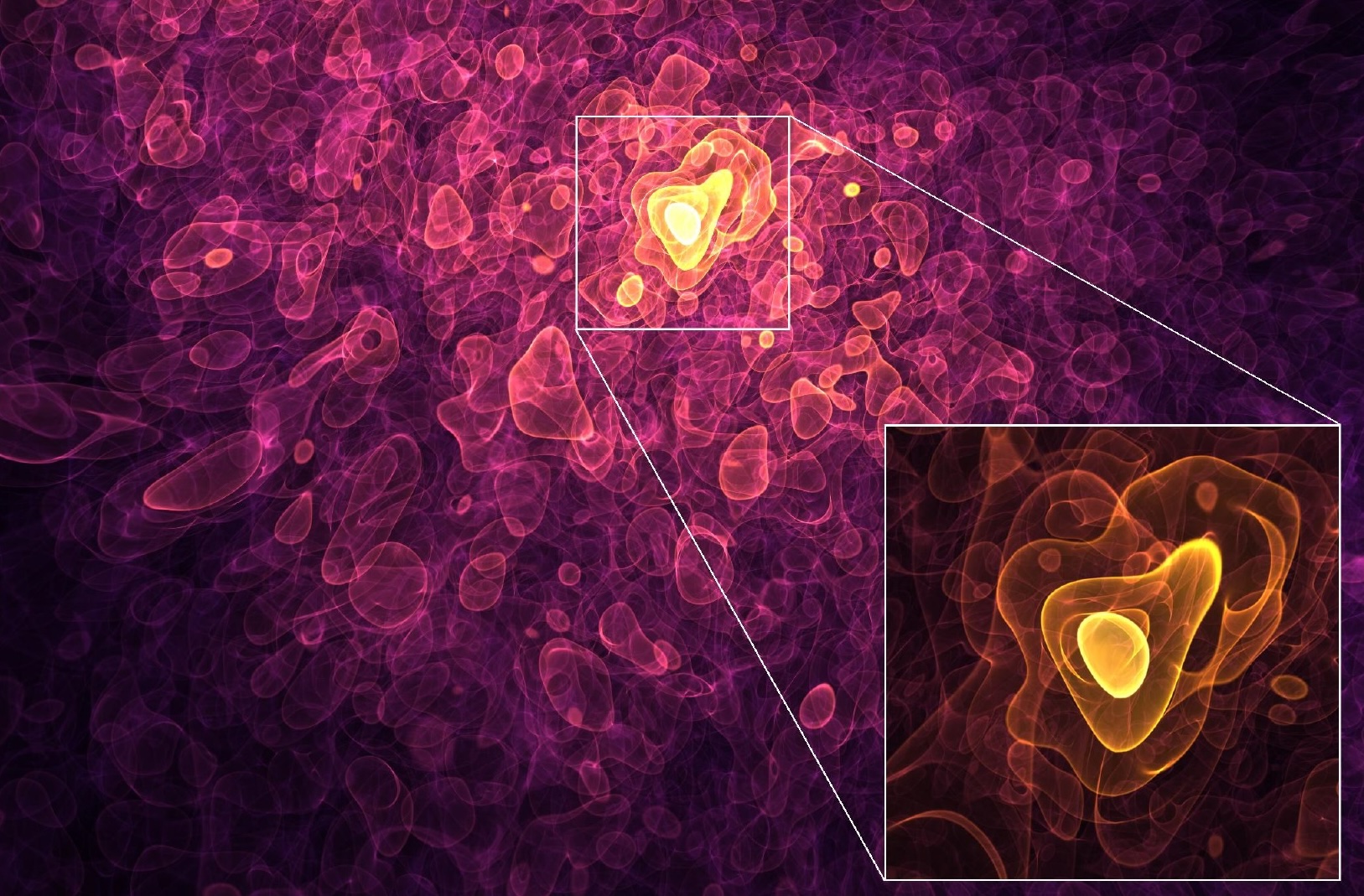
We usually imagine dark matter as a swarm of heavy, invisible particles. But are there other possibilities? What if dark matter isn't a storm of sand, but rather a vast, invisible ocean that hums?
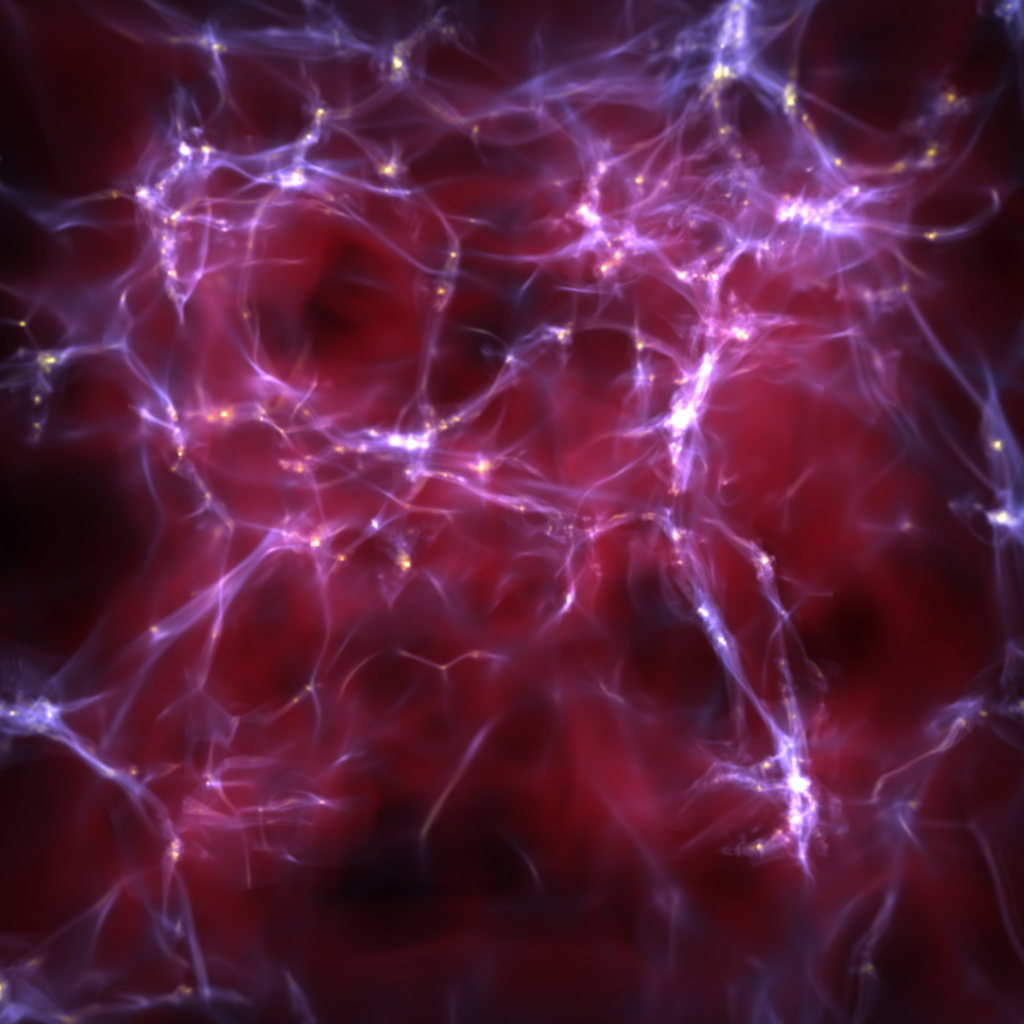
The invisible web of dark matter makes up more than a quarter of the cosmos and indirectly affects all other forms of matter and energy through its gravitational pull. Astronomers derive its presence by observing stars, galaxies, clusters of galaxies, and a relict ancient light from a time when the Universe was only about 380 000 years old.
Despite decades of searching using ultra-precise detectors built with cutting-edge technology, we have never directly detected these dark matter particles in our laboratories. However, recent technological advances enable us to push the detection sensitivity to new levels; we are currently living through a golden age for dark matter science.
A Universe That Hums
The standard model of cosmology and dark matter struggles to explain certain fine-scale properties, such as the inner structure of dwarf galaxies or the abundance of satellite galaxies orbiting the Milky Way. Ultra-light dark matter, also called wave dark matter, is an entirely different proposition. In this concept, dark matter consists of particles so incredibly light that they behave more like waves moving through the cosmos rather than individual billiard balls.
Because ultra-light dark matter acts like a wave, we don't catch it by smashing atoms together. Instead, we "hear" it through careful listening. "Think of it as a background hum," explains Federico Urban of the FORTE team. " Latest advancements in the field of quantum sensing have led to a significant progression in laboratory searches for these signals."
At FORTE, we try to listen to the hum of the wave-like Universe through the distinctive approach of combining laboratory experiments with astrophysical observations. The FORTE team is tuning in across all frequencies to explore the unknown properties of dark matter, listening carefully to the whispers of the dark Universe.
Terrestrial Quantum Sensors:
For our research we use data from some of the most sensitive instruments ever built. We also design new experiments that are uniquely geared to catch the dark matter waves and, if we are successful, determine its properties such as its mass and how it interacts with light and ordinary matter.
Gravitating Seismographs: Gravitational wave detectors use lasers bouncing between mirrors to measure ripples in spacetime itself. If a dark matter wave washes through, it will set the mirrors trembling, creating shifting interference patterns that we can observe.
Quantum Echo Chambers: Experiments such as QUAX or MADMAX act like high-precision bells. We wait for the "wind" of dark matter to strike them, causing the resonant cavities to ring at a specific microwave frequency.
Atomic Rulers: Atom interferometers and atomic clock networks enable physicists to measure time and distance with extraordinary precision. If a wave of dark matter passes through the laboratory, it could subtly disturb the ticking of these clocks or the position of the atom clouds – and we can detect these tiny disturbances.
Levitated Sensors: Suspending tiny particles in vacuum using lasers or magnetic fields and monitoring their vibrations, enables physicists to detect waves of dark matter passing through.
The Cosmic Laboratory:
Our search doesn't stop at the laboratory door. The Universe itself provides us with natural detectors on a truly colossal scale. FORTE researchers analyse astrophysical data to find the fingerprints of ultra-light dark matter in the sky:
Cosmic Lighthouses: Astronomers monitor pulsars – dead stars that spin hundreds of times per second with an astonishingly regular frequency, beaming radio waves to the Earth like a lighthouse. They are amongst the most precise clocks in the entire Universe. If the space between Earth and a pulsar is filled with travelling dark matter waves, the arrival time of those flashes will flicker. We analyse data from pulsar timing arrays, a collection of radio telescopes observing pulsars, to hunt for these minute variations.
Black Hole Superradiance: Rotating black holes can “grow” a cloud of dark matter around them, similar to an electron cloud surrounding an atomic nucleus. This process, called superradiance, extracts rotational energy from the black hole, slowing its spin and emitting continuous gravitational waves that we can detect on the Earth; these gravitational waves then teach us about the dark matter clouds that triggered them.
Warped Galaxies: By using observations related to how star clusters, the dynamics of satellite haloes, and how stellar streams move around larger galaxies, we map the texture, called "granularity", of dark matter haloes to determine whether their motion matches the wave-like patterns predicted by our models.
Frontier research in cosmology and gravity
Join us in understanding the Universe.